How does a fitness brand start in a welding bay? Mine did. My father cut and welded steel in Perai for most of my life, mostly factory racking and trolley frames, and I spent my school holidays holding the other end of whatever he was measuring. By the time I took the shop over I could read a weld at a glance. What I could not explain, at first, was why the gym equipment people brought in for repair always broke in the same three places.
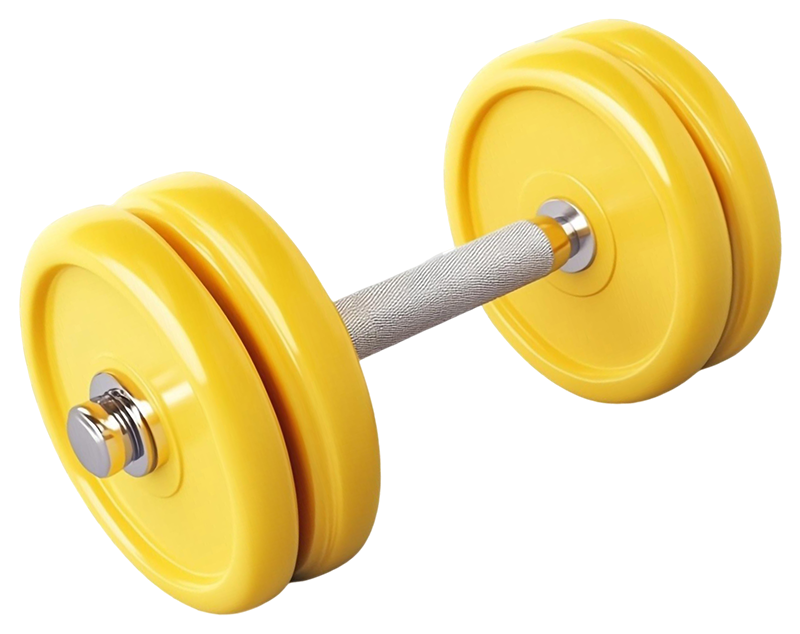
So I started keeping notes. A squat rack that shifts under a heavy set is rarely a design problem: it is 1.5mm tube sold as 2mm, standing on a footprint too narrow for the load to travel through. A dumbbell that shreds your palms has knurling cut deep and fast, output over grip. A resistance band that snaps in its second month was dipped rather than layered. Every failure has a cause you can name, and the moment you can name it you can specify around it.
That is the entire method here. Before anything carries our name I want the mill certificate for the steel, the wall thickness measured instead of claimed, and a load test I have watched myself. Racks get pulled well past the rating printed on them. Plates go onto a calibrated scale rather than a guess. Bars get spun by hand so I can listen to the sleeve, because a good bearing sounds like a steady drum roll and a bad one tells you long before your first rep does.
Who ends up training on all this? Shift nurses with a bench in the spare room. Riders who get twenty minutes before work. Small studios up north that cannot afford to buy the same rack twice. None of them want to read a spec sheet, and none of them should have to. My job is to do the reading so the equipment behaves identically on day one and on day one thousand.
Training is a tempo, not a sprint. It rewards whoever keeps showing up at the same beat for years, and that only works when the gear underneath stays predictable. So buy once, learn the movement properly, and let the equipment become the part you never have to think about again.